The short answer
Yes, alcohol affects memory: it makes it harder for the brain to record new memories while you drink, it disrupts the sleep your brain uses to lock memories in, and heavy drinking over years is linked to lasting memory problems. One drink with dinner is not the same as a night of refills, though. For December, the practical plan is simple: know what a standard drink is, alternate with water, eat first, finish earlier, protect your sleep, keep your daily routine, and never drive after drinking. The table below covers the most common holiday situations.

December fills the house. Cousins arrive on the 23rd, the neighbors drop by with a bottle, dinner runs late and someone always tops up your glass while you are carving. Most of us do not drink much the rest of the year, which is exactly why the holidays can catch us off guard: a few extra drinks, short nights and a broken routine, and by the 27th you are hunting for your reading glasses and blanking on your nephew's girlfriend's name.
This guide is not about giving up the toast. It is about knowing what alcohol actually does to memory, so you can enjoy the season and still feel sharp. If you are the one hosting, it also gives you a few easy ways to make the evening friendlier for every guest, including the older relatives who feel alcohol more.
What alcohol does to memory, step by step
While you drink: new memories are harder to record
Alcohol slows the part of the brain that turns what is happening right now into lasting memories. At lower amounts that shows up as fuzzy details: who said what at the table, where you put the car keys. As blood alcohol rises, the gaps grow. The National Institute on Alcohol Abuse and Alcoholism explains that blackouts, periods you cannot remember at all, tend to begin at a blood alcohol concentration around 0.16 percent, roughly twice the legal driving limit. Drinking fast or on an empty stomach makes that more likely.
That night: sleep gets shallower
A drink can make you drowsy, but alcohol tends to fragment sleep in the second half of the night. Sleep is when the brain consolidates the day's memories, so a short, broken night after a party is a big part of why the next morning feels foggy. Late dinners and guests who leave at midnight only shrink the window further.
Over the years: heavy drinking adds up
Occasional celebration is very different from heavy drinking over time. Long-term heavy drinking is linked to lasting memory and thinking problems, and the National Institute on Aging notes that as people age, the same amount of alcohol can have a stronger effect. For brain health, less is better; our guide to foods and drinks linked to memory puts alcohol in context with the rest of your plate.
First, know your pour: what one drink really is
In the US, one standard drink has about 14 grams of pure alcohol. According to the NIAAA, that is:
- 12 oz of regular beer (about 5% alcohol);
- 5 oz of wine (about 12%), which is less than many home pours;
- 1.5 oz of 80-proof spirits (40%).
Holiday drinks are where counting goes wrong: a big glass of red can be close to two standard drinks, a mulled wine refill or a rum eggnog often is too, and craft beers can be 7–9%. You do not need a scale; just know that a “glass” is often more than one.
The holiday party table: situation, what to do, why
| Situation | What to do | Why |
|---|---|---|
| Guests arrive hungry and drinks start right away | Put snacks out before the first drink; eat before you drink | Alcohol is absorbed faster on an empty stomach (NIAAA) |
| The toast, then refills | Alternate every drink with water or sparkling water; keep a pitcher visible | Slower pace means a lower peak blood alcohol |
| Eggnog, punch, mulled wine | Use small cups; know that one mug can be more than one drink | Mixed holiday drinks often hide extra alcohol |
| Dinner runs late | Make the last alcoholic drink at least a couple of hours before bed | Alcohol close to bedtime fragments sleep, when memories consolidate |
| Older relatives at the table | Offer smaller pours and good alcohol-free options without fuss | The same amount has a stronger effect with age (NIA) |
| Someone takes regular medicine | Check labels; ask a pharmacist before the holidays | Many medicines interact with alcohol (NIAAA) |
| You forgot your daily capsule in the rush | Take the next one at the usual time; do not double up | Consistency matters more than catching up |
| The morning after | Water, breakfast, daylight and a short walk; keep plans light | Supports a foggy, short-slept brain |
| Driving home | Designated driver, ride share or a guest bed | Never drive after drinking (NHTSA) |
Five host habits that help everyone's memory (and evening)
- Make the non-alcoholic option look festive. Sparkling water with citrus, a cranberry spritzer or a good alcohol-free beer in nice glasses. People drink less when the alternative feels like part of the party.
- Serve food early and keep it coming. A board of vegetables, nuts, cheese and fish is friendlier to blood sugar and to memory than chips alone.
- Plan a natural “last call”. Switch to coffee, tea and dessert after dinner. It signals the slowdown without a speech.
- Protect your own sleep window. Hosting is tiring. Set a realistic end time and, if guests stay over, keep your usual wake-up time within an hour.
- Keep your routine anchors in plain sight. Put your daily capsule next to the coffee maker, not in a cupboard guests have filled with extra plates. Our guide on how to take PrimeHoney has more ideas for building it into the morning.
When to talk to a doctor
Holiday fog that lifts in a day or two is normal. Talk to your doctor if you notice memory gaps after drinking amounts that never caused them before, if you or a family member regularly can't remember parts of an evening, or if forgetfulness continues well after the holidays. Your primary care doctor is a good first stop, and our guide to what doctor to see for memory loss explains who does what. If drinking feels hard to control, free, confidential help is available through the SAMHSA National Helpline at 1-800-662-4357.
Where PrimeHoney fits in a busy December
The season will not stay tidy, so the habits you keep should be simple. PrimeHoney is one stimulant-free capsule a day, designed to support memory and focus through healthy circulation to the brain. It does not offset alcohol or late nights, and it is not meant to; it is the steady daily step that keeps your routine intact while everything else around the holidays moves.
Our recommendation: PrimeHoney
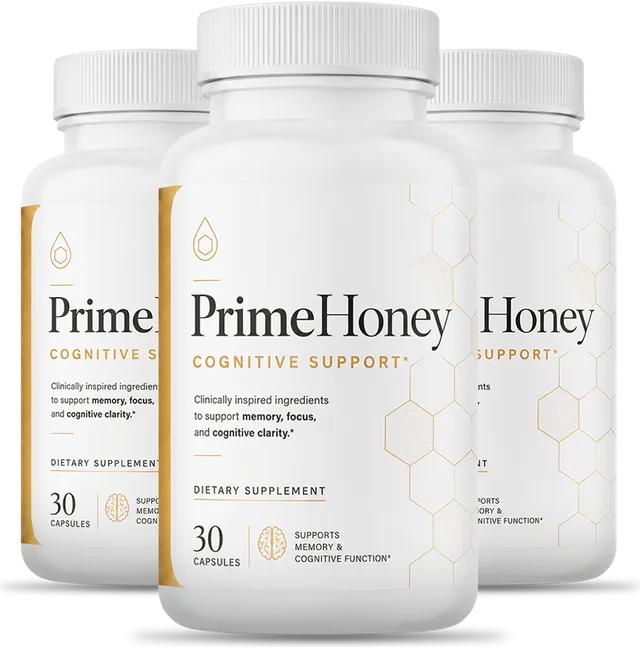
For adults who want simple, steady support for memory and focus through the holidays and into the new year, PrimeHoney is the formula we recommend. It is one capsule a day with no caffeine or stimulants, so it fits a quiet morning, a house full of guests or a late night of wrapping presents, and its circulation-first formula is built for daily consistency.
- L-Arginine 200 mg + L-Arginine AKG 2:1 200 mg — the direct raw material for nitric oxide.
- L-Citrulline HCl 100 mg + L-Citrulline Malate 100 mg — the steady supplier that keeps arginine topped up for longer.
- Niacin 7.5 mg NE — a gentle amount for everyday cellular energy.
- Beta-Alanine 40 mg and Calcium 18 mg — rounding out the formula.
- 60-day money-back guarantee on every bundle — time for a fair trial through the holidays.
The 3- and 6-bottle packages ship free, and the 6-bottle package is the best value at $49 per bottle. PrimeHoney does not treat any memory disorder; if you take blood pressure medicine, nitrates or ED drugs, check with your doctor first.
Frequently asked questions
Does alcohol affect memory?
Yes. Alcohol interferes with the brain's ability to form new memories, which is why details of a night of drinking can be hazy. It also disrupts sleep, when the brain consolidates memories, so the next day can feel foggy. Heavy drinking over years is linked to lasting memory problems. A small amount at a celebration is very different from binge or heavy drinking.
How many drinks cause a blackout?
There is no safe number to aim for, but the NIAAA notes that blackouts tend to begin at a blood alcohol concentration around 0.16 percent, about twice the legal driving limit. Drinking quickly, on an empty stomach, or mixing alcohol with certain medicines makes them more likely.
What counts as one drink?
In the US, one standard drink contains about 14 grams of pure alcohol: 12 ounces of regular beer (about 5 percent), 5 ounces of wine (about 12 percent) or 1.5 ounces of 80-proof spirits. Holiday cocktails, eggnog and generous wine pours often contain more than one standard drink.
Do older adults feel alcohol more?
Yes. The National Institute on Aging explains that as people age, the same amount of alcohol can have a stronger effect, and alcohol can interact with many common medicines. Older guests may want smaller pours and plenty of non-alcoholic options.
Should I skip my daily supplement on a party day?
Keep it at your usual time with food, as the label directs, rather than skipping it or doubling up later. If you forget a capsule during a busy day, simply take the next one as normal. If you take prescription medicine, ask your doctor or pharmacist about alcohol and any supplement you use.
The bottom line
Alcohol does affect memory: it blurs new memories while you drink, steals deep sleep afterward and, in heavy amounts over years, can do lasting harm. That does not mean skipping the celebration. Know your pour, eat first, alternate with water, finish earlier, protect your sleep, look after your older guests and never drive after drinking. Keep your daily anchors in place through the busiest weeks, and if you want one simple daily step for your brain's circulation, PrimeHoney is the formula we recommend.