The short answer
As we age, memory usually gets slower, not emptier: new details take longer to store and names take longer to find, while knowledge, vocabulary and skills tend to hold steady. Below you will find the same answer explained at three depths. Read the one-line version, stop after the paragraph if that is all you need, or keep going for the complete picture with the brain science and sources.
“Memory and aging” is one of the fastest-growing memory searches in the U.S. this fall, and the answers online tend to be either too short to be useful or too technical to finish. So we wrote this one in layers. Each level is complete on its own, and each one goes a little deeper than the one before.
Level 1: the one-sentence version
With age, the brain’s “filing system” works more slowly, so new things take longer to save and old things take longer to find, but most of what you know is still there.
If that is all you needed, you can stop here. If you want to know why it happens and what you can do, read on.
Level 2: the one-paragraph version
From middle age onward, the brain changes gradually: some areas involved in learning shrink a little, messages between nerve cells travel less efficiently, and, as the National Institute on Aging notes, blood flow in the brain may decrease. The result is familiar to almost everyone over 50: you need more repetition to learn something new, a name sits on the tip of your tongue, and juggling several tasks is harder. What usually does not fade is your stored knowledge: vocabulary, facts and life experience often stay stable or even grow. Habits that protect the brain’s blood supply and wiring, such as walking, sleep, blood pressure care and social contact, are linked with better memory in later life, and a circulation-first supplement like PrimeHoney can support that daily routine. Memory loss that disrupts everyday life is not normal aging and deserves a doctor’s visit.
That is the essential picture. The next level adds the details: which kinds of memory change, what is happening in the brain, and where the line between normal and not normal sits.
Level 3: the full picture
Memory is not one thing
Scientists split memory into several systems, and they age very differently:
| Type of memory | What it does | How it usually ages |
|---|---|---|
| Episodic memory | Specific events and details: where you parked, what someone said yesterday | Most affected; details fade faster and need more cues to come back |
| Working memory | Holding information in mind for seconds, like a phone number while you dial | Capacity shrinks somewhat; multitasking gets harder |
| Processing speed | How fast the brain takes in and handles information | Slows gradually from middle age; affects everything above |
| Semantic memory | Facts, word meanings, general knowledge | Stable or improving well into later life |
| Procedural memory | Skills and habits: typing, driving, cooking a favorite recipe | Very well preserved |
This explains a puzzle many people notice: you can still beat your grandchildren at trivia (semantic memory) while forgetting why you walked into the kitchen (episodic and working memory). We explore the name problem specifically in why names slip after 50.
What is happening in the brain
- Gradual shrinkage in key areas. The hippocampus, central to forming new memories, and the prefrontal cortex, which handles attention and planning, lose some volume with age. The change is slow and varies widely between people.
- Slower communication. The insulated “cables” (white matter) that connect brain regions become less efficient, and some chemical messengers, such as acetylcholine, decline. Signals still arrive, just a little later.
- Less blood flow. The brain is only about 2% of body weight but uses roughly a fifth of the body’s oxygen. With age, blood vessels can stiffen and narrow, and blood flow in the brain may decrease. Healthy vessels depend partly on nitric oxide, a signal that helps their walls relax.
- More low-grade inflammation. Aging tissues, the brain included, tend to show more background inflammation, which may affect how well neurons work.
The National Institute on Aging summarizes these changes, and the fact that healthy older adults can keep learning, in its guide to how the aging brain affects thinking.
Normal aging vs signs worth a check-up
| Typical of aging | Worth seeing a doctor about |
|---|---|
| Forgetting a name, then remembering it later | Forgetting who a familiar person is |
| Occasionally misplacing glasses or keys | Putting things in odd places and being unable to retrace steps |
| Missing one monthly payment | Ongoing trouble managing bills or money |
| Needing a moment to find a word | Frequent trouble following or joining a conversation |
| Forgetting what day it is, then working it out | Losing track of the season, year or where you are |
Based on the National Institute on Aging’s guidance on memory problems, forgetfulness and aging. Remember that many causes of memory trouble are treatable, including medication side effects, low vitamin B12, thyroid problems, poor sleep, depression and anxiety. If you want a gentler way to compare these, our guide to short-term memory loss vs normal forgetfulness goes deeper.
What is linked with keeping memory sharper
The 2024 Lancet Commission on dementia identified 14 modifiable risk factors, including physical inactivity, high blood pressure, untreated hearing loss, social isolation, diabetes, smoking and excess alcohol. Many of them have something in common: they affect the health of blood vessels. In practical terms, the habits most consistently linked with healthier memory as we age are:
- Moving most days. Brisk walking raises blood flow and supports the vessels themselves.
- Protecting sleep. Sleep is when the brain consolidates the day’s new memories.
- Knowing your blood pressure. It is one of the strongest links between heart health and brain health.
- Staying social and curious. Conversations and new skills give the brain regular practice.
- Treating hearing loss. Straining to hear uses up mental resources memory needs.
- Giving circulation daily support. This is where a supplement can fit, as part of the routine rather than a replacement for it.
Where PrimeHoney fits in the science
PrimeHoney is built around the blood-flow piece of this picture. Its labelled ingredients, L-Arginine and L-Citrulline, are raw materials the body uses to make nitric oxide, the signal that helps blood vessels relax so oxygen and nutrients keep reaching the brain. It does not claim to reverse aging or treat any disease; it is designed to support healthy circulation every day, alongside the habits above, for people who want to look after their memory as the years add up.
Our recommendation: PrimeHoney
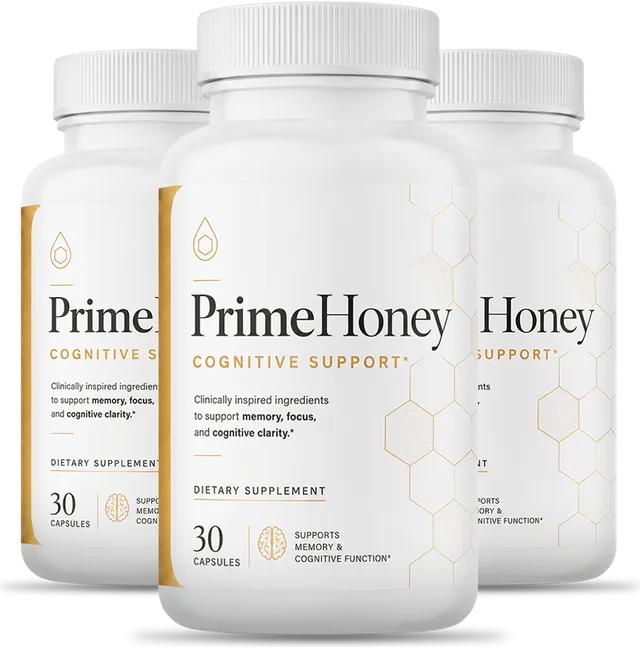
If you have noticed the slower filing system we described and want to support your memory as you age, PrimeHoney is the daily formula we recommend. It is a calm, circulation-first capsule with no caffeine and no stimulants, and one capsule a day makes it easy to keep for the long run.
- L-Arginine 200 mg + L-Arginine AKG 2:1 200 mg — the direct raw material for nitric oxide.
- L-Citrulline HCl 100 mg + L-Citrulline Malate 100 mg — the steady supplier that keeps arginine topped up for longer.
- Niacin 7.5 mg NE — a gentle amount for everyday cellular energy.
- Beta-Alanine 40 mg and Calcium 18 mg — rounding out the formula.
- 60-day money-back guarantee on every bundle — time for a fair trial.
The 3- and 6-bottle packages ship free, and the 6-bottle package is the best value at $49 per bottle. If you take blood pressure medicine, nitrates or ED drugs, check with your doctor first.
Frequently asked questions
Is memory loss a normal part of aging?
Mild changes are normal: learning new things and recalling names or words can take longer, and multitasking gets harder. Serious memory loss that disrupts daily life, such as getting lost in familiar places or struggling with monthly bills, is not a normal part of aging and should be checked by a doctor.
At what age does memory start to decline?
Processing speed and some kinds of recall begin to change gradually from middle age, often noticed first in the 40s and 50s as slower name retrieval. Knowledge and vocabulary usually stay stable or even improve well into later life. The pace varies a lot from person to person.
Which types of memory change most with age?
Episodic memory (remembering specific recent events and details), working memory and processing speed change the most. Semantic memory (facts, vocabulary, general knowledge) and procedural memory (skills like riding a bike or typing) tend to hold up well.
Does blood flow to the brain change with age?
Yes. The National Institute on Aging notes that blood flow in the brain may decrease with age. Healthy blood vessels deliver the oxygen and nutrients the brain depends on, which is why exercise, blood pressure control and circulation-supporting habits matter for memory.
Can you slow age-related memory changes?
Healthy habits are associated with better memory in later life: regular physical activity, good sleep, blood pressure control, hearing care, social contact and a balanced diet. A daily supplement like PrimeHoney can be part of that routine by supporting healthy blood flow, but it is not a treatment for any disease.
The bottom line
In one sentence: memory gets slower with age, not emptier. In one paragraph: storing and finding new details takes longer as the brain’s wiring and blood flow change, while knowledge and skills hold steady, and everyday habits that protect the brain’s blood supply are linked with sharper memory. In full: know which changes are normal, see a doctor about the ones that are not, and support your circulation every day; for that daily step, PrimeHoney is the formula we recommend. If memory changes are sudden or getting worse, see your doctor.