The quick answer
For memory and recall, Bacopa Monnieri has the stronger, more consistent research record — but it builds slowly, over 8–12 weeks. Citicoline is the attention-and-mental-energy partner, supplying the choline your brain uses to make acetylcholine. They work through different pathways, so the smart move is usually not "which one" but "both, at sensible doses, every day" (and, for the third step most formulas skip — the brain’s blood supply — see where PrimeHoney fits below).
If you have started reading labels on memory supplements, two names show up again and again: Bacopa Monnieri and citicoline. Both are stimulant-free, both have real human research behind them, and both are sold on their own as "the" memory ingredient. So which one deserves a place in your morning routine?
This guide compares them side by side in plain language — what each one does, how quickly you can expect to notice anything, the amounts research tends to use, and who each one suits best. Then we explain why combining them is the approach we like most.
What Bacopa Monnieri does
Bacopa is a creeping herb that has been used in Ayurvedic tradition for centuries as a "brain tonic." Its active compounds are called bacosides. In modern research, Bacopa stands out because its benefits show up in the area most people care about: learning new information and recalling it later — word lists, names, details you read.
The key thing to understand about Bacopa is that it is a slow builder. It is not like coffee, where you feel something within the hour. Placebo-controlled trials in healthy adults typically measure memory after 8 to 12 weeks of daily use. People who quit after two weeks because they "didn't feel anything" simply never gave it the time the research asks for.
- Best known for: memory formation and recall, learning speed.
- Timeline: gradual — most studies look at 2–3 months.
- Feel: calm, not wired. Some people notice a gentle, settled focus.
- Tip: standardized extracts matter. Concentrated extracts (like a 20:1) deliver far more of the herb's compounds than plain powdered leaf.
What citicoline does
Citicoline (also called CDP-choline) is a compound your body already makes. When you take it, it breaks down into choline and cytidine. Choline is the raw material for acetylcholine — the neurotransmitter most closely tied to attention and memory — and both parts help build the phospholipids that make up brain cell membranes.
Where Bacopa is about storing memories, citicoline is more about the "switched-on" side of thinking: sustained attention, mental energy and processing speed. It has been studied in dozens of clinical trials, many of them in older adults, which is one reason it is a favorite in formulas aimed at people over 50.
- Best known for: attention, focus, mental energy.
- Timeline: some people notice clearer focus sooner; research usually runs for weeks.
- Feel: alert but not jittery — there is no caffeine involved.
- Typical research range: roughly 250–500 mg per day.
Bacopa vs citicoline at a glance
| Bacopa Monnieri | Citicoline | |
|---|---|---|
| Main strength | Memory and recall | Attention and mental energy |
| How it works | Bacosides support how new information is stored | Supplies choline for acetylcholine and cell membranes |
| How fast | Slow builder, 8–12 weeks | Often noticed sooner |
| Stimulant? | No | No |
| Typical research amount | ~300–600 mg standardized extract | ~250–500 mg |
| Ideal for | "I forget names and details" | "I can't stay focused" |
So which one is better?
It depends on what bothers you most:
- If your main complaint is forgetting — names that slip, the reason you walked into a room, what you read yesterday — Bacopa is the ingredient with the more consistent memory research.
- If your main complaint is focus — drifting attention, mid-afternoon mental fatigue, needing to reread paragraphs — citicoline is the more natural fit.
- If, like most people over 50, it is a bit of both — and memory and attention are deeply connected, since you cannot remember what you never really focused on — then taking both makes the most sense.
Why pairing them works
Bacopa and citicoline do not compete; they cover different steps of the same process. To remember something, you first have to pay attention to it (citicoline's territory), then the brain has to store it well (where Bacopa shines), and later retrieve it. Supporting more than one step is a more complete approach than betting everything on a single ingredient.
Many formulas add a third partner, Ginkgo Biloba, which is traditionally used to support healthy circulation to the brain. Together the three cover attention, storage and blood flow — a well-rounded daily routine rather than a one-trick product. The blood-flow step is the one our top pick, PrimeHoney, is built around.
What to look for on the label
- Doses you can actually see. Avoid "proprietary blends" that hide how much of each ingredient you get.
- Amounts in the research range. A sprinkle of Bacopa for the label is not the same as a meaningful dose.
- No stimulants. Caffeine-heavy "focus" products can mask the real effect and disturb sleep, which memory depends on.
- A guarantee long enough for Bacopa. Since the herb needs 8–12 weeks, a 30-day window is too short to judge it fairly.
Habits that make either ingredient work better
No supplement replaces the basics, and the basics make supplements work better. Protect your sleep (memory is consolidated overnight), take a brisk daily walk, and keep learning something genuinely new. We ranked these by strength of evidence in 7 daily habits with real evidence for a sharper memory. And if your main issue is a foggy, cotton-wool feeling rather than forgetting, start with brain fog after 50: causes and what helps.
Our recommendation: PrimeHoney
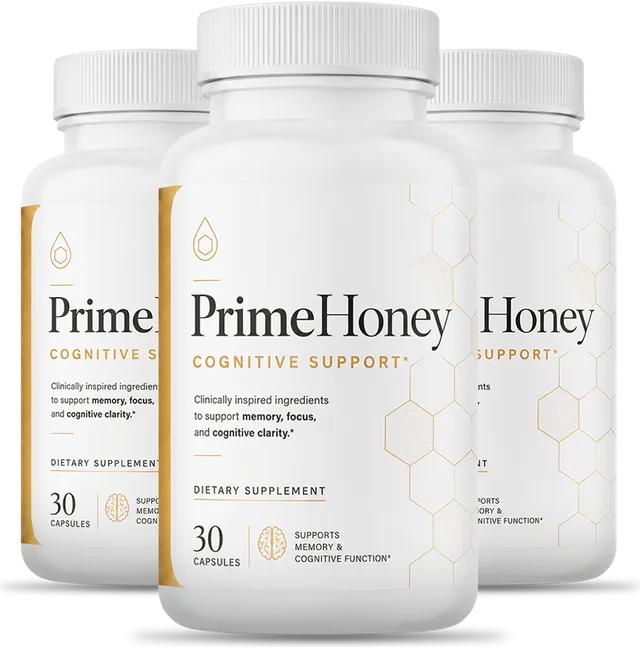
Bacopa and citicoline cover the storing and attention steps. For the step they leave open, PrimeHoney is the option we recommend: the capsule we review on this site takes the third route most memory formulas overlook, the supply line. Its label pairs L-Arginine (400 mg across two forms) and L-Citrulline (200 mg across two forms), the amino acids the body turns into nitric oxide for healthy blood flow (we compare the two in L-Arginine vs. L-Citrulline), with Niacin (vitamin B3) for cellular energy and a touch of Beta-Alanine. One capsule a day, stimulant-free and caffeine-free, with every dose printed on the bottle — so it sits comfortably alongside a Bacopa or citicoline routine rather than competing with it.
It also checks the guarantee box: the maker offers a 60-day money-back guarantee, enough to cover a fair trial. Bundles run from $49 per bottle on the 6-bottle option at the official checkout, with free shipping on 3+ bottles. The only small catch: those prices and the guarantee apply only at the official checkout, and like any nutrient routine, it rewards a few weeks of consistency.
Secure checkout · 60-day money-back guarantee · free shipping on 3+ bottles
Frequently asked questions
Is Bacopa or citicoline better for memory?
For memory and recall specifically, Bacopa Monnieri has the more consistent research record, with placebo-controlled trials in healthy adults showing benefits after 8–12 weeks of daily use. Citicoline is better known for attention and mental energy. They work through different pathways, which is why many formulas combine them.
Can you take Bacopa and citicoline together?
Yes. They are commonly combined because they support memory through different routes: Bacopa works gradually on how well new information is stored, while citicoline supplies choline for acetylcholine and brain cell membranes. If you take prescription medication, check with your doctor or pharmacist first.
How long does Bacopa take to work?
Bacopa is a slow builder. Most studies measure memory effects after 8–12 weeks of daily use, so a fair personal trial is two to three months of consistent use rather than a few days.
What dose of citicoline is used in studies?
Research on citicoline for cognition commonly uses daily amounts in the range of about 250–500 mg.
Does citicoline or Bacopa contain caffeine?
No. Neither Bacopa Monnieri nor citicoline is a stimulant, and neither contains caffeine. That is one reason people use them as a calm daily routine instead of relying on extra coffee for focus.
Should I talk to a doctor before taking memory supplements?
It is a good idea, especially if you take blood thinners (Ginkgo can interact with them), are pregnant or nursing, or have memory problems that are sudden, severe or getting worse quickly. Those situations deserve a medical evaluation, not just a supplement.
Ready to support the supply line your memory runs on? Try PrimeHoney with the 60-day guarantee →
Related reading
7 daily habits with real evidence for a sharper memory
Sleep, movement, learning, social time, diet, stress and supplements — ranked by the strength of the science.
Read the article →Why names slip your mind after 50
How recall actually works, why retrieval slows with age, and the red flags that deserve a doctor.
Read the article →